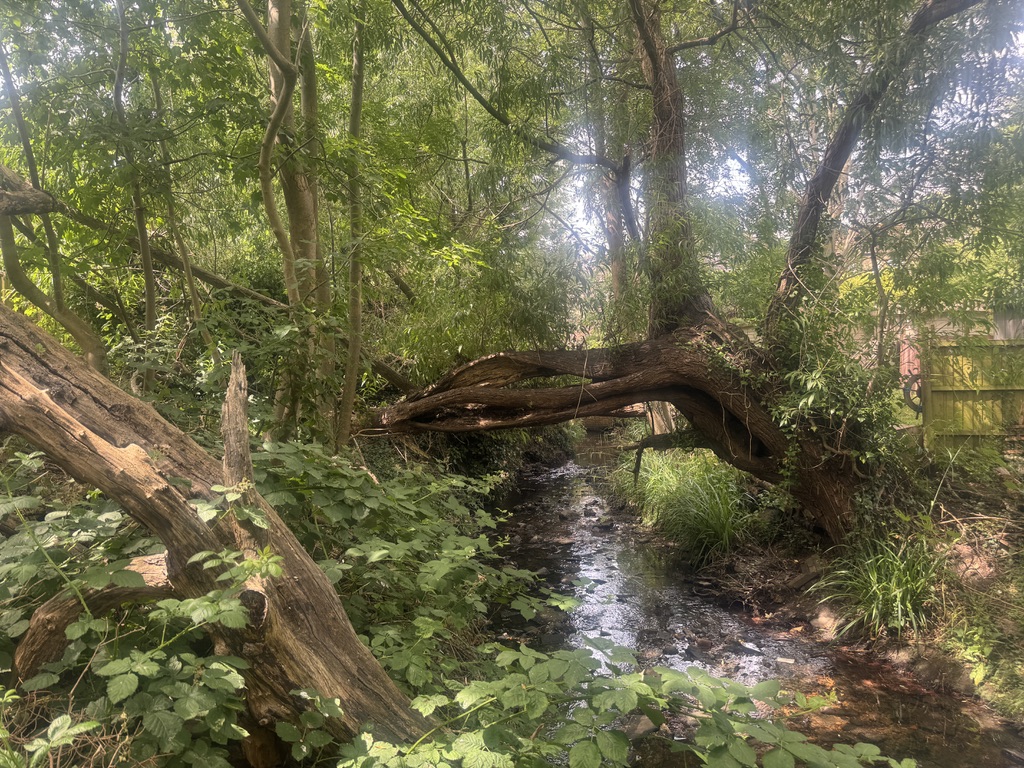
As I was finishing my residency at Tower Gallery and preparing for my walk of the Lea, I came across a call out from Artillery Arts looking for artists with connection to the river Ching for an artistic exploration alongside the rewilding work planned in Waltham Forest.
As one of the Lea’s seven tributaries, (or 27 including smaller waterways and brooks) this was an opportunity to deepen my thinking in relation to the whole river system by spending time with one of the closest branches in London.
Preparing my application, on the edge of Epping Forest under trees and by the river, I was initially preoccupied with the brick outfalls that channel rainwater from tarmacked space into the river, and the sounds of the water and the birds in an otherwise densely urban environment.
I didn’t have a set idea what I would do in response, other than inviting people to connect to the river as a wild landscape and see themselves as one of many living organisms populating it.
By the time I was walking the Lea, I’d been accepted onto the project. On the stretch between Enfield and Tottenham I kept looking to my left, the east, for signs of the confluence with the Ching.
It would be almost two months before I finally found it.
Being part of a group of artists was exciting, and wonderfully distracting. We met up in person by the side of Chingford Sainsbury’s and spent hours walking just two miles to the lake at Higham Park along the river and streets. Magical encounters with giant snails, wild horseradish, and of course each other: painters, textile artists, photographers, pigment makers, ceramicists, and poets.
Slowly through the alchemy of place and conversations on that day I became fixated on the blackberry plant, endemic up and down the river. Blackberrying was always an urban pursuit for me when younger, something wild, but entirely familiar within a city. The plant is boundary marker between areas of safe play and those slightly more exciting adventurous spaces where I had imagined myself a child-explorer.
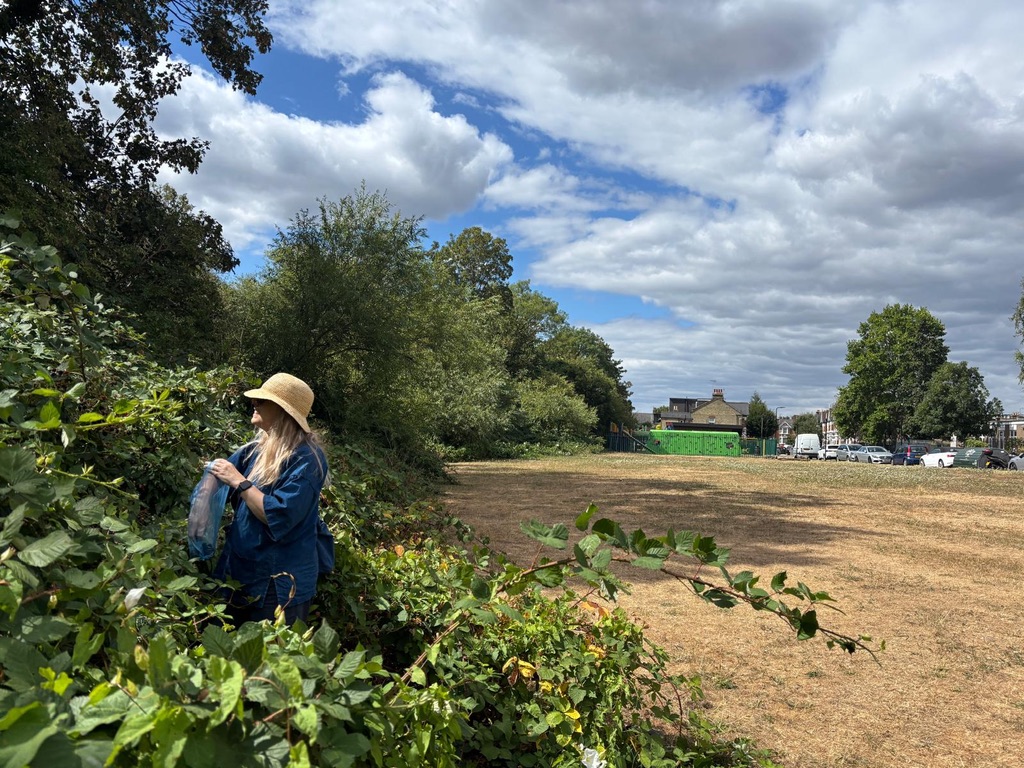
Its role as a pioneer species and rewilder also appealed, as the project’s focus on rewilding the river lent itself to thinking about what lessons the plant might have for us city-dwellers in how we relate to other life around us.
I learned a lot from other artists on the project. In particular, Fatima who inducted me into the practice of hammer printing leaves on fabric (which she does to a photographic level of detail) and Lucy who was patient enough to explore the lower reaches of the river and show me where it flowed into the Lea.
Mostly, I learned from the blackberry plant itself and its lessons fed into a zine created for the project’s final exhibition at Hale End Library.
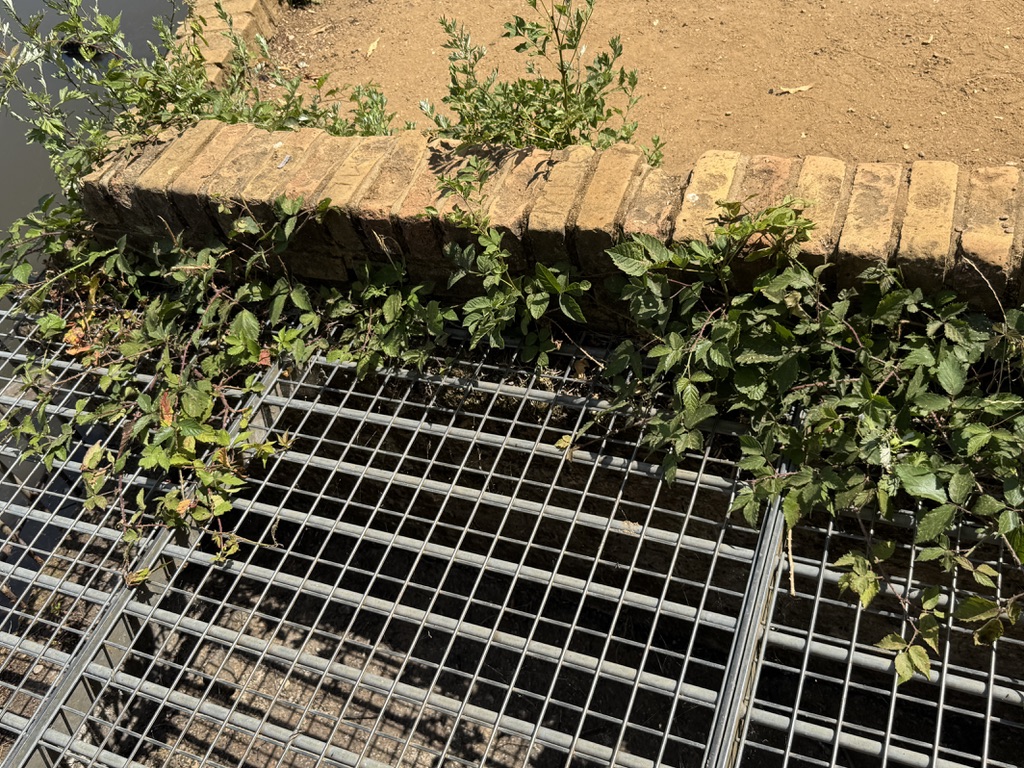
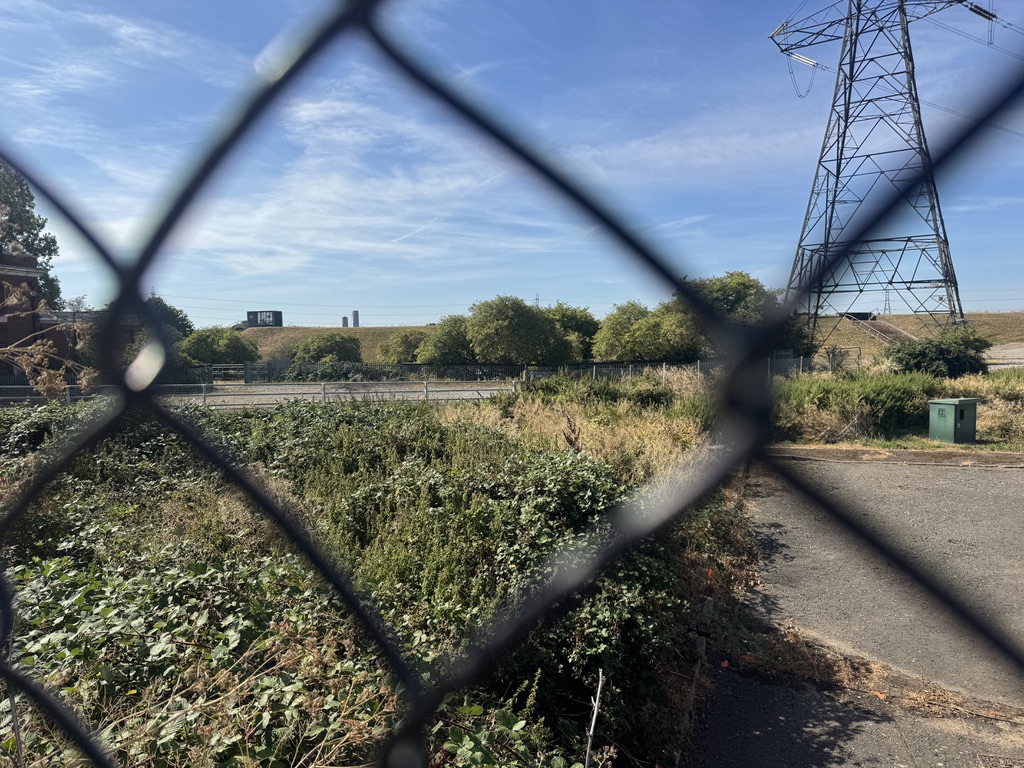
The river officially starts under a grill at the southern end of Connaught water, and ends behind barbed wire and metal gates just off the A406. Despite this carceral relationship with humanity, it provides shade and beauty and a habitat for some of our most incredible neighbours, from the giant snails imported by the Romans centuries ago, to our familiar blackberry which accompanies the river through its course, peeping out from the grill at Connaught water, and lining the short stretch where it meets the waters of the Lea.
My work with the Ching has been part of Wildways along the Ching, a project run by Waltham Forest Council with local partners and is funded by the Mayor of London Green Roots Fund. Artillery Arts is the creative engagement partner for Wildways along the Ching.